The Power of Gravity. And Elaine
Age 8
Dad’s marriage lasted a year.
He believed he married someone better than himself, counted himself lucky, and set to cobbling together a new family.
When I was entering the third grade, brother Ken and I were jacked from our grandparents’ Montana home to play house with a new step family in Seattle.
The steps included my new mom, Arlene, tall and refined, and Elaine, a hulking thug of a girl with long red hair, two years and ten pounds on me, and a mean streak that could slice leather.
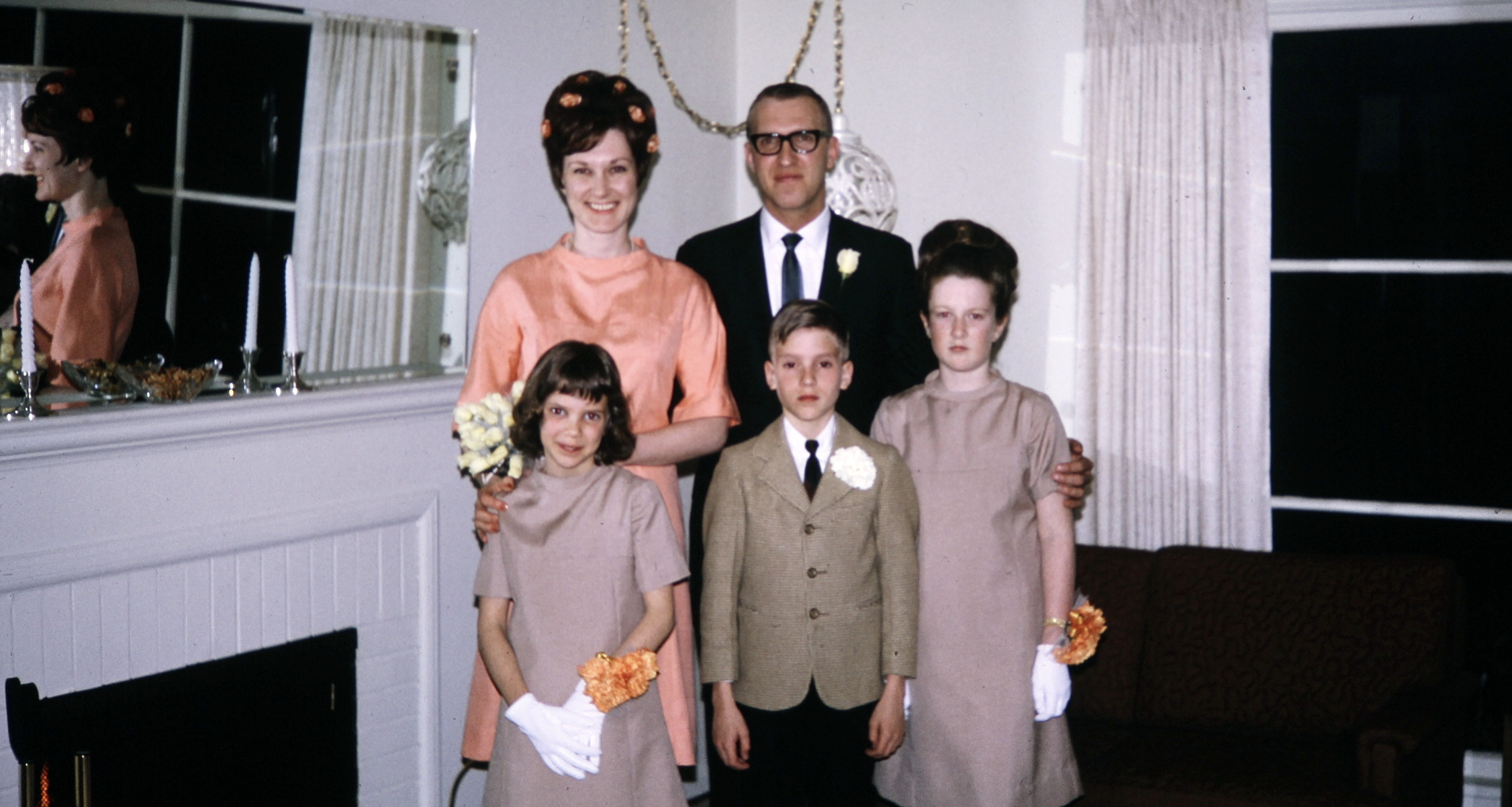
Arlene and Elaine didn’t say goodbye when they left us after that first year of step family-hood. One day, they were just gone.
Ken and I were then packed into Dad’s VW Bug and shunted back to our grandparents’ house, where we had been raised since we were infants.
I had wanted a real mom and a real family, and I was given elegant, volatile eggshells.
My Gramma’s elegance was on the inside. On the outside, she was short and round, sturdy, with wide duck feet like mine.
And hers was my favorite face in any room.
Age 9
Back at our little house on Woodford Street in Missoula, I was back in the arms of the certainty that Ken and I were children blessed.
Most kids didn’t get to run amok like we did, trusted to our own devices and each other’s care.
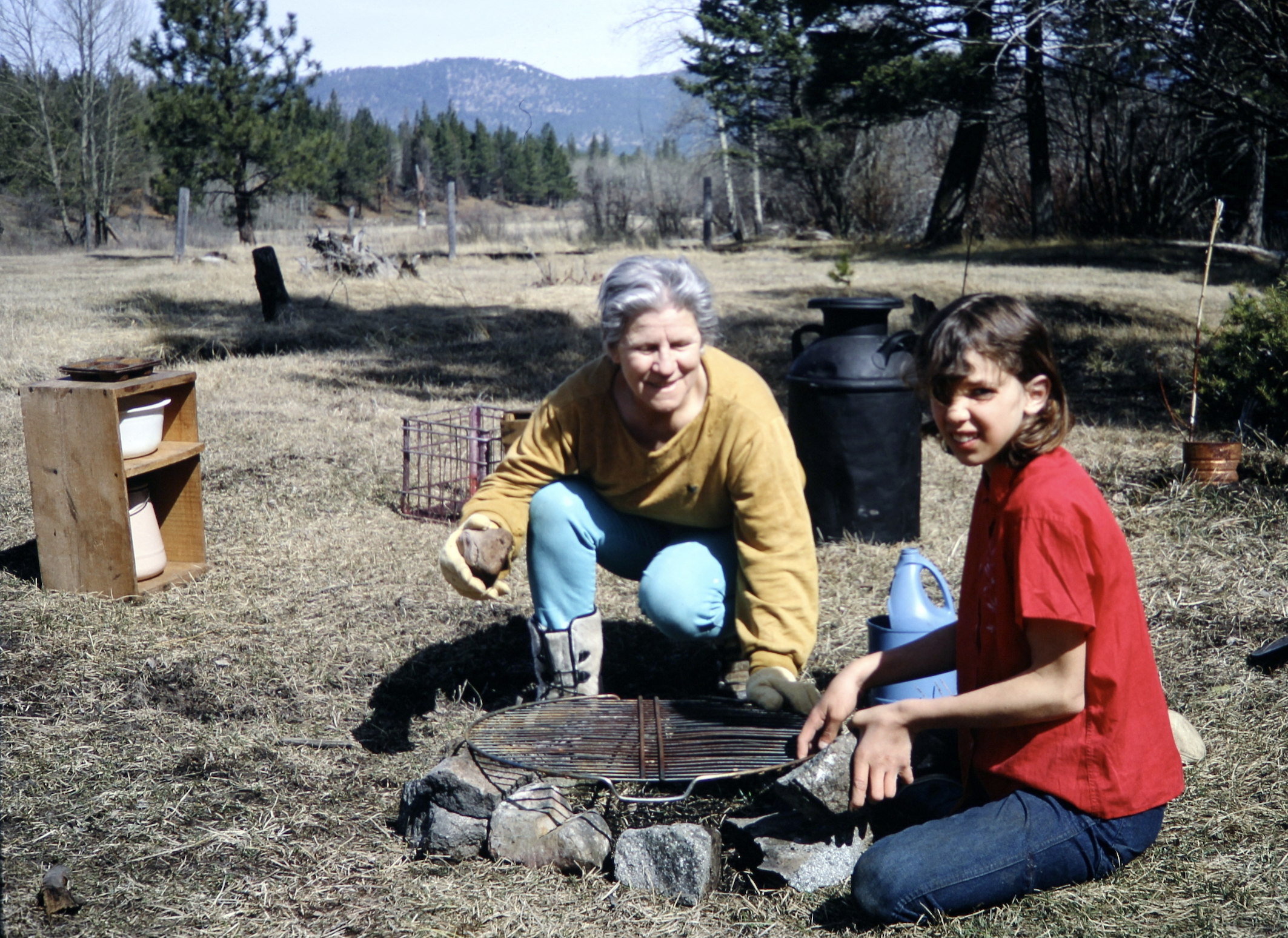
We spent weekends and holidays in a hodgepodge setting that our grandparents created called “Camp”—just a shack by a creek in the woods of western Montana.
We would swing on Tarzan Ropes over Ashbey Creek, fish for brook trout with a worm on a hook at the end of a willow branch, and light firecrackers in juicy cow pies.
We baked brownies in an outdoor oven, roasted marshmallows for s’mores, and played cards by the warmth of a potbelly stove. After the sun went down, Gramma delighted us with tales of growing up on a ranch on the wild Montana prairie.
Age 10
As casual as the spin of a revolving door, however, Ken and I were summoned back to Seattle.
One year after our dishonorable discharge from Windsor Vista, Dad and Arlene reconciled and reunited the step family. I don’t know what changed while we were gone. Ken and I believed we were responsible for driving the couple apart.
What drove them back together, we would never know.
We were working our way through a family do-over and – as only the resilient can – Ken and I adapted. When the next summer’s vacation came around, Ken and I got to go back to Montana, to our grandparents’ arms, and to Camp.
I’m sorry to say, Elaine came along for part of the summer.
She didn’t fit in at Camp. She was mortified by the outhouse, couldn’t bait a hook, and complained endlessly about the chores. She was also forced to live under the iron rule of our grandmother, who wasn’t inclined to put up with any bullshit whatsoever.
But when Elaine hurt me on purpose one day, Gramma found a whole new level of “iron.”
One of the things about Camp was this: we made our own fun. Play didn’t come in boxes or arrive with instructions. We invented it as we went.
So when Elaine invited me to play a game she’d made up, I felt cautiously hopeful. Maybe she was learning the rhythm of this place.
In her game, I sat on her shoulders, as if she were lifting me above a crowd. Elaine was big and tough; so this seemed reasonable enough. The idea was that I’d lean backward until my hands touched the ground while she held onto my feet.
I’d land in a handstand, swing my legs down, and walk out of it like a gymnast.
Not necessarily as fun as, say, swinging on the Tarzan Ropes, but it was something we were doing together. Which felt like progress.
And she talked me into doing it again.
This time, when I tipped backward and the world flipped on its axis, my hands reached for the ground and found only air.
Elaine let go of my feet and dropped me to the ground in a heap.
I didn’t want to play anymore. I stood up, dizzy and quiet, and walked to the little bridge over the creek and sat with my feet dangling above the water.
I didn’t cry. I didn’t tell. I stared down at my green sneakers, the rocks beneath the surface, the slow, clear current sliding past. The rest of the world rested in silence and shadow.
That’s when Gramma appeared.
“Kyla?” she said. “What’s wrong?”
“I don’t feel good,” I told her.
“Can you get up?”
It’s only then that I realized my right arm had been resting in my lap, limp, as if it had no bones.
Everything moved quickly after that. Camp shut down with military precision. Gramma tucked me into the back seat of her green Volkswagen station wagon. The hospital in Missoula. The X-ray.
A fractured collarbone.
I spent the rest of the summer in an awkward brace that held my shoulder still and my world small.
What stayed with me wasn’t the fall. It was that Gramma knew – just by looking at me – that something was wrong.
The feeling of being seen like that reached deep into my ten-year-old heart.
What was said between Gramma and Elaine over this matter, I would never know. But the remainder of the summer was subdued. Elaine and I circled around each other warily or avoided each other entirely.
I just felt lucky that the brace would come off before school started again in the Fall.
But my romping around days for the season were over.
The step family fell back into a happy family routine as the school year rolled out. Back in the arms of her mother – and the accomplice to malice – Elaine returned to the Way of the Thug.
If I were a string bean and Ken were a carrot, then Elaine would be, like, a jumbo ear of corn. She was that, um, big-boned. And she knew that size is power.
To wit: I would be minding my own business watching I Dream of Jeannie after school, and Elaine would burst into the TV Room and hurl herself on top of me, throwing punches for the fun of it.
There’s nothing more compelling to a bully than a sensitive twig of a girl. I despise confrontations, and I have never in my life picked a fight with anyone.
But my Gramma didn’t raise me to be anybody’s chump.
This is when my stepmother burst into the room. Arlene had a way of making her entrance at the precise moment when I was most likely to be defending myself with a good healthy shove to Elaine’s face.
Then I was suddenly the troublemaker.
Age 11
Some months later, Ken and I showed up after school and found a near-empty house and a father in shock. A moving van had come earlier that day and carried away the best of our furniture, the last dregs of family life, Arlene, Elaine, and the sum total of their belongings.
Dad explained the inexplicable the best he could. Then he made us dinner from something that came out of the freezer. We ate in our breakfast nook, as usual, but the house was overrun by silence. Dad was quiet; Ken was catatonic; and I just sat there, all my trust dropped to the ground in a heap.
The scraping of our forks was deafening as we pushed peas and potatoes around our plates. The only other sound I heard was the pounding of my own little heart, raging against confusion, villainy, and powerlessness.
One of our neighborhood friends told us later that he had peeked through the window of our house that drab afternoon. He had seen my dad, sitting on the long table in the dining room with his head in his hands, alone and bereft in a house abandoned by those he thought would make it a home.
Arlene left our family portrait hanging by itself on the big wall of the TV Room. She had stripped the wall of all the other pictures and art, mostly hers in the first place, to reposition in her new life.
The single thing I will remember forever about the family portrait is that Ken’s hair had been given a buzz cut that Arlene orchestrated and pissed Gramma off.
The rest of us are just smiling shadows in my memory, as immaterial as dust bunnies under the bed.
Arlene also left five of Elaine’s pretty dresses in an upstairs closet, among them three I had always coveted: the turquoise A-line with the black faux-fur trim at the neck and wrists, the red plaid with pleats below the waist, and a tartan skirt and a white blouse topped with a Peter Pan collar.
They all hung in an otherwise empty space that had been cleaned out and swept bare.
I did not understand why my stepmother would do this. To taunt, to punish, to make one last statement of contempt—like the photo she left on the wall of family portraits?
I left those beautiful dresses hanging where they were and closed the closet door for good and forever.
It would be five years before I might grow into them, anyway. By then, fashion would have changed, my interest in dresses would have turned to Levi’s and T-shirts, and Elaine and her bitch mother would be long gone.
# # #
Read Part 1 of “Stepsisters and Bullies” here.
Excerpted from my forthcoming memoir Nobody’s Child.
Side note: I would love it if you followed me on Substack. All my content is free and you don’t have to jump through a bunch up hoops to find me! Thank you. ❤️
 Kyla Merwin
Absolutely love these stories; although this one made me misty! ♥️I guess there’s a part of me th