Following the Tracks Back to Belonging
When I was young, our family often gathered at a cabin in the woods. We called it Camp Gramma—after my wonderful half-crazy grandmother who whipped it up from an abandoned fire cracker shack, imagination, and grit.
We spent our summers and holidays, our weekends, and our youths at Camp. This was where we learned how to belong: to one another, to the land, to rules that made sense.
We were a hodge-podge tribe—my grandparents, my brother Ken, cousin Sam and me, my absent father on holidays, sometimes Sam’s father. We gathered, played cards, and paid attention to the woods: hauling water, cutting firewood, fishing, reading, daydreaming. Summers crackled with firecrackers; winters slid downhill on toboggans.
This is how we shaped our days at Camp. And how Camp shaped us.
One late November, as full-on grownups, Sam and I went up-creek to cut a Christmas tree. We headed for a meadow—open ground, where trees had room to grow without crowding each other out.
I traipsed through that field the way I’d been moving through life—wide-open, unrooted, careful not to tangle myself too deeply in anything. I dashed from tree to tree, looking for the perfect one.
When we found it, I stayed behind to guard our prize so we wouldn’t lose it in the sprawl of the meadow. Sam headed back to the truck for the saw.
Crack. Slide. Prff.
The sound came from the edge of the field, not fifteen yards away. An animal. Big.
“Sam,” I whispered as he crossed back toward me, saw slung over his shoulder. “There’s something over there.”
We forgot the Christmas tree immediately and hovered near the spot. Sam—true Montana man, certified hunter and tracker—saw the hoof prints first.
“That’s too big for a deer,” he said, his voice lifting. “Wait here.”
He came back with a rifle.
We took off without thinking, charging uphill through the snow, ducking under branches skirting entanglements. I regretted every cigarette I’d smoked in the previous ten years. I’d grown more accustomed to pumps, suits, and martinis than mountainsides.
Sam followed the tracks relentlessly. We zig-zagged up the hill until we burst onto a logging road. I was nearly blind with effort, just trying to keep up, when Sam stopped short.
“There,” he said, pointing across a wide gully. “Just below the ridge.”
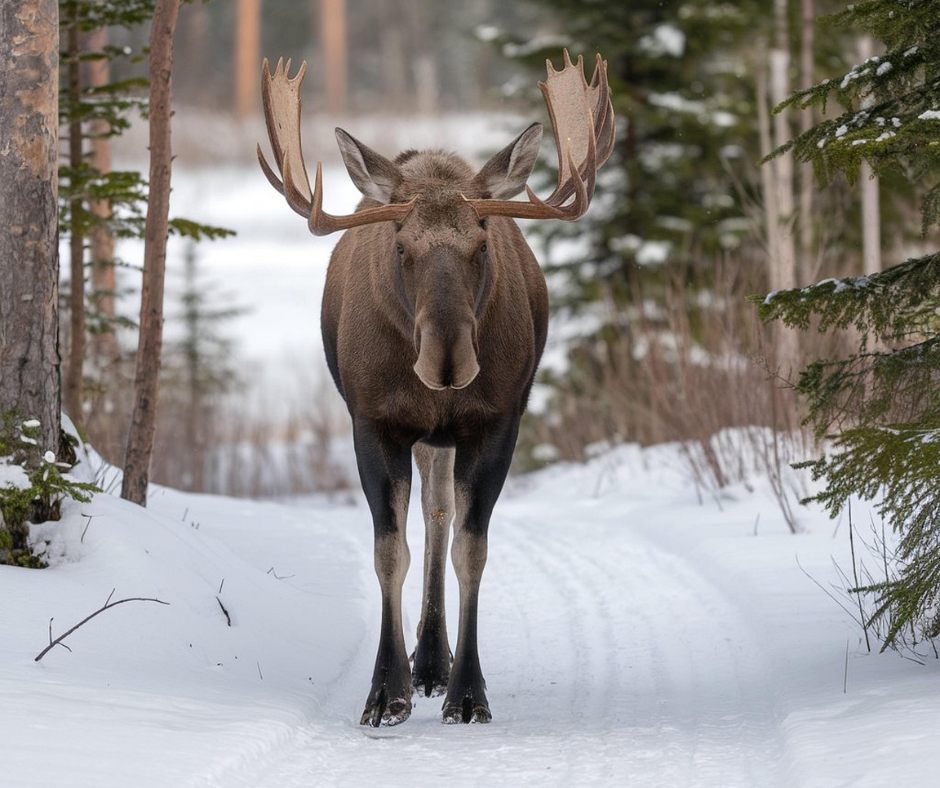
She stood there with her baby—a magnificent moose cow, square-nosed, antlered, perfectly still. She looked straight back at us from two hundred yards away.
Sam handed me the rifle so I could see her through the scope. “We can’t shoot a cow,” he said. “It’s against the rules.”
In the crosshairs, she was enormous and vulnerable all at once. For a split second, something primitive stirred. I wanted to belong to the tribe again, to bring back the prize—the moose, the perfect Christmas tree, the story of adventure. I wanted to be intertwined. Imperfect. Interfered with.
Montana does that to a person. She calls when the running of a life starts to feel like a wild moose chase—charging uphill, following signs you don’t fully understand, unsure of what you’re after or why.
If you listen, Montana says, Here. Over here. And she reveals the unmistakable shape of your longings.
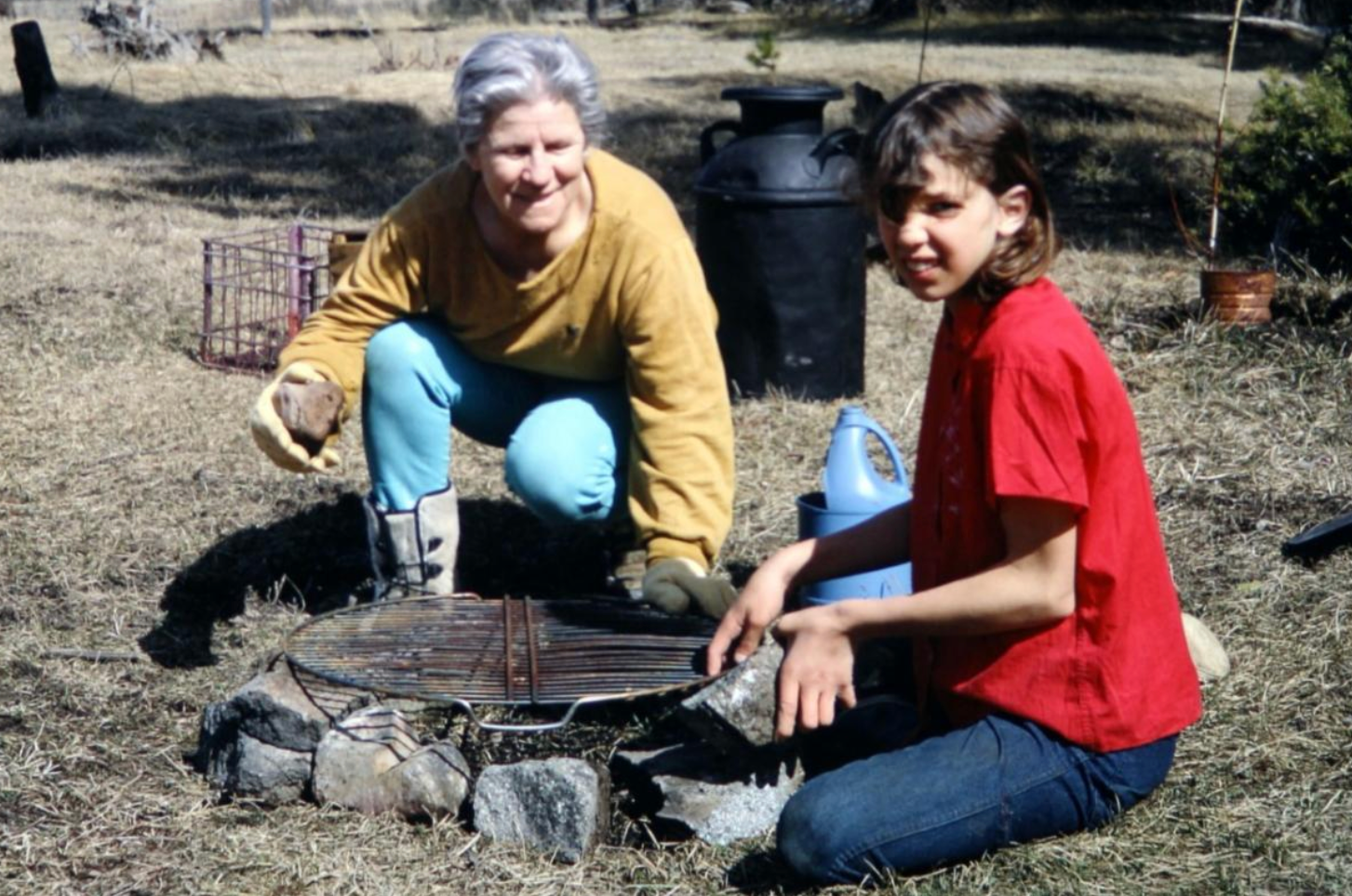
I still hear Montana’s voice in the rustle of aspen trees. I hear the creek by the cabin. The splash of a fish caught on a line tied to a stick, baited with a worm from under a rock. I hear the dinner gong calling three wild children—soaked to the knees—home for supper. I hear sliced potatoes sizzling in a cast-iron skillet over an open fire. I hear Gramma telling us to wash up and set the table.
These are the things I hear.
Montana doesn’t explain. She reminds me of things I lost on the climb—the good rules, the crackle of an open fire, and the messy beauty of being entangled.
###
Side note: I would love it if you would follow me on Substack. All my content is free and you don’t have to jump through a bunch up hoops to find me! Thank you. ❤️
 Kyla Merwin